Mythwink
The Wolf They Could Not Break
They tricked a wolf into a ribbon. It cost one god his hand, and bought the world maybe a thousand years.
Norse Mythology
Mythwink
They tricked a wolf into a ribbon. It cost one god his hand, and bought the world maybe a thousand years.
Norse Mythology
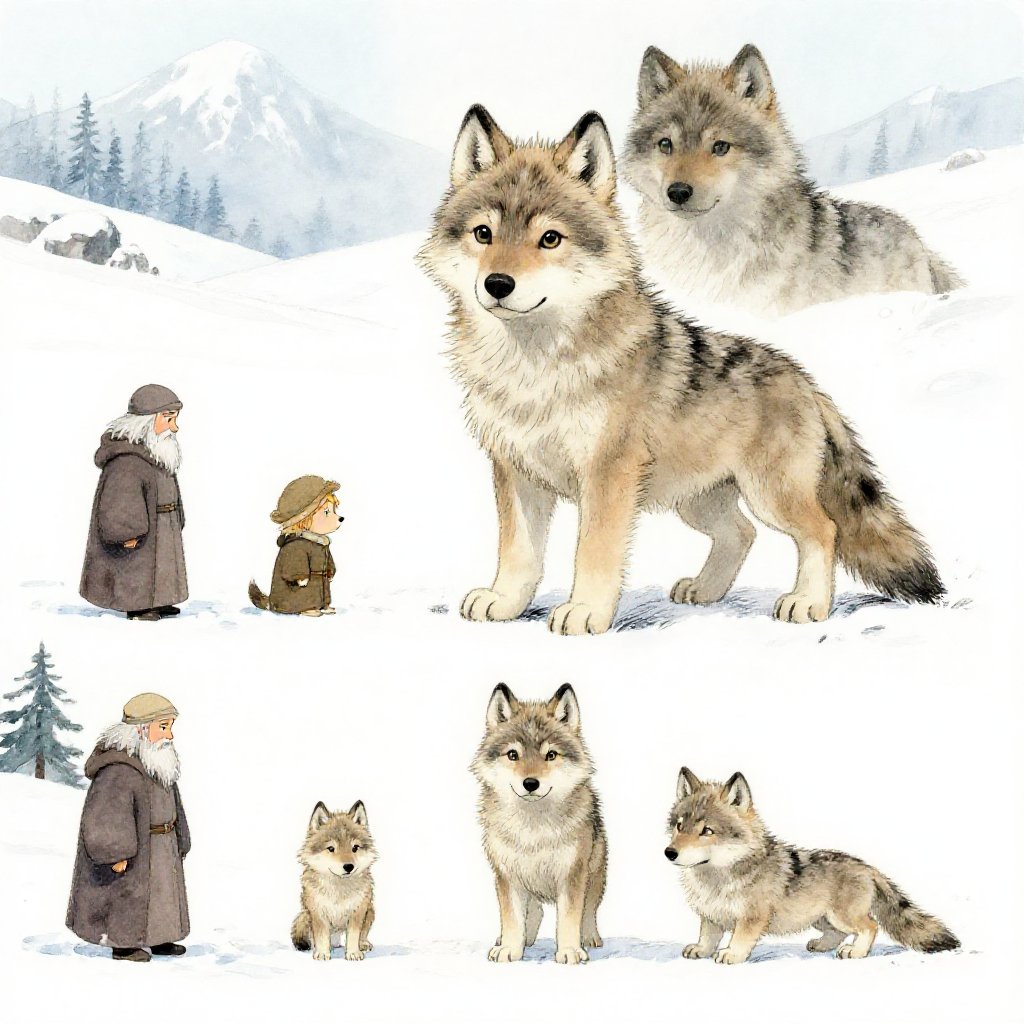
Fenrir was a wolf. But not a wolf the way a wolf in the forest is a wolf. He was the wolf the word "wolf" was reaching for and never quite found.
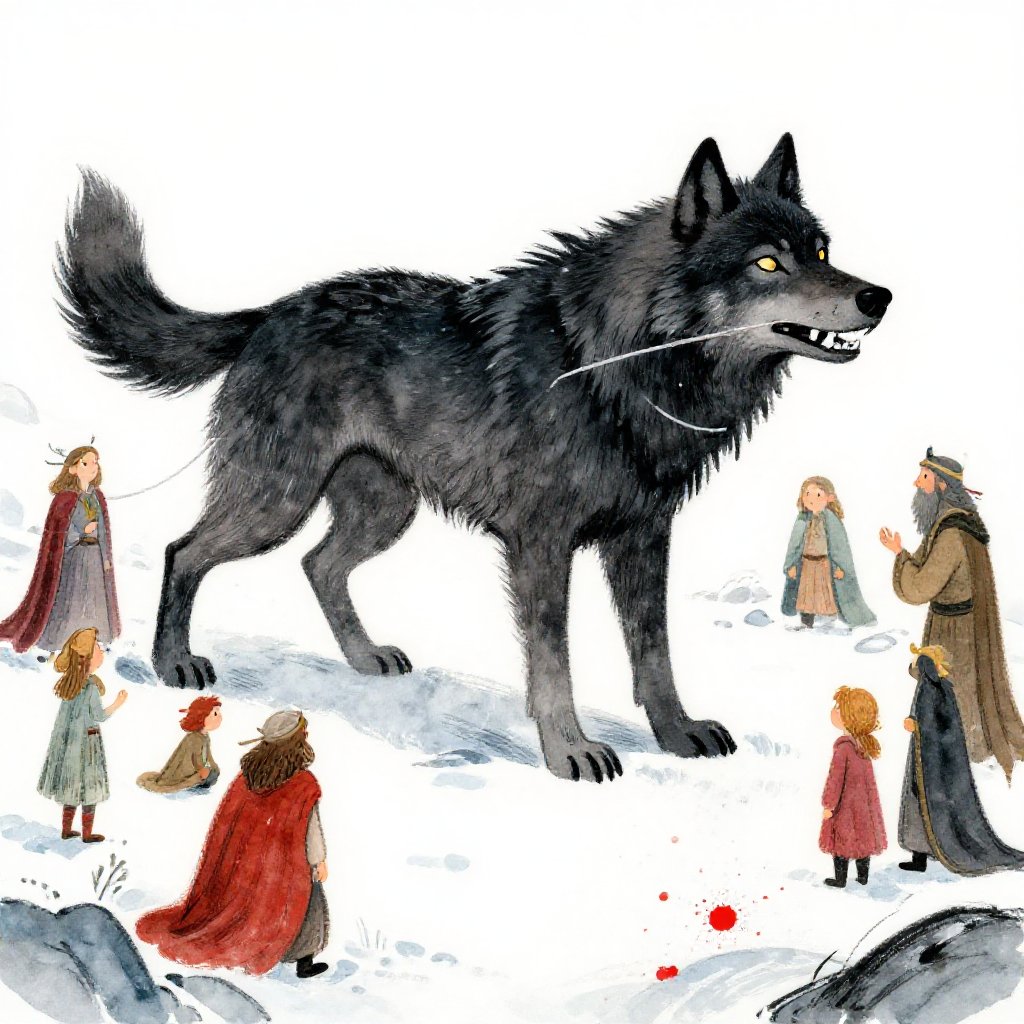
He was born of Loki and a giantess named Angrboda, deep in a cave in Jotunheim. Even as a pup, the gods felt something shift in the world when they looked at him. Not quite fear. More like recognition. This creature was going to eat the sky one day. They knew it the way you know a storm is coming before you see the clouds.
The gods brought Fenrir to Asgard. In hindsight, this seems like an odd choice. But they wanted to keep an eye on him, and to keep an eye on a wolf that size, you need to keep him close. Only one god was brave enough to feed him alone, standing within reach of those jaws. That was Tyr. Every day, meat in hand, standing right there. The wolf took the food carefully. This became a kind of trust. Or at least something that looked like trust from the outside.
The wolf grew. Not the way a young dog grows, filling out and leveling off. He grew the way a river grows in flood season, always larger than the last time you checked, always past the line you thought was the limit. The gods measured him against the ash trees. They came back three months later and the mark was at his shoulder. Something had to be done.
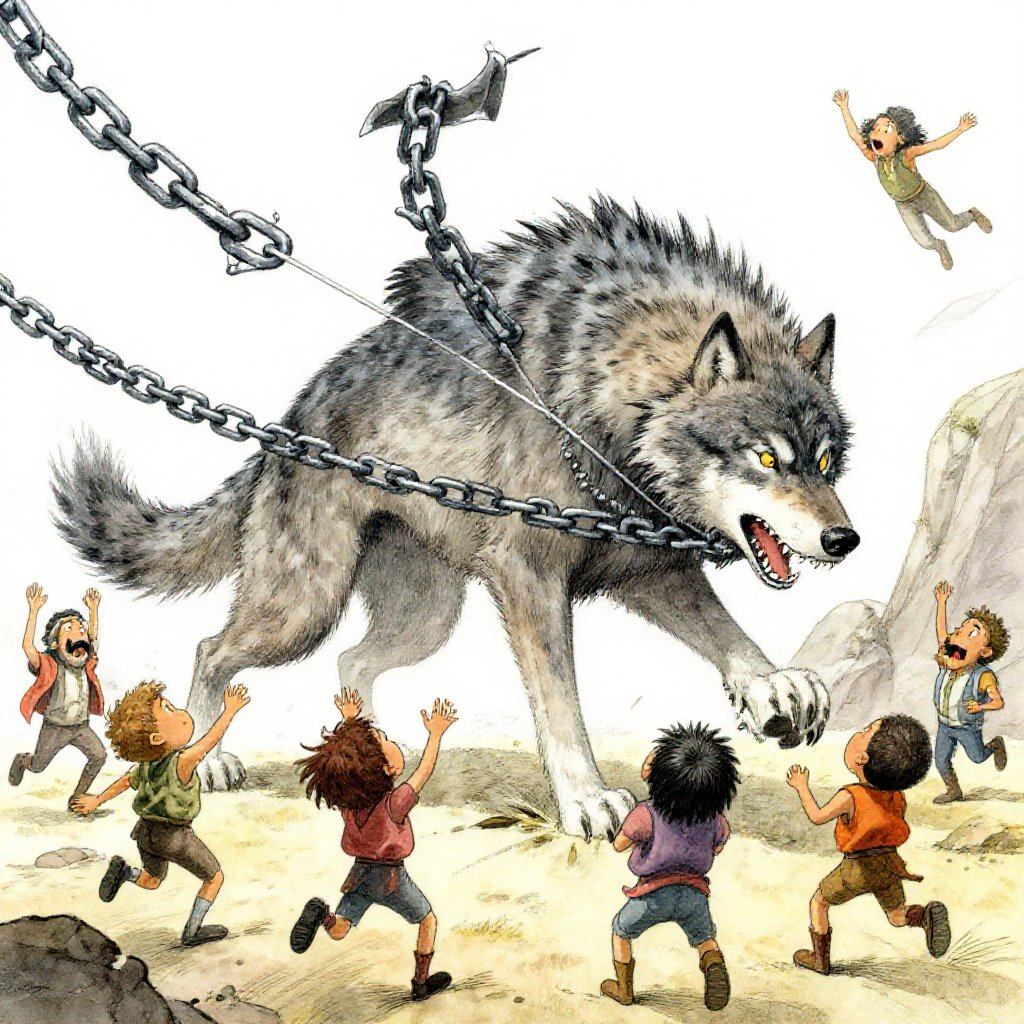
The gods brought a chain called Laeding. It was iron, thick as a man's wrist, and they presented it to Fenrir with what they hoped looked like a sporting challenge and not a trap. "Let's see if you can break it," they said.
Fenrir looked at the chain. He looked at the gods. He was not stupid, not even slightly stupid, but he was young enough to enjoy being underestimated. He let them put it on him. He flexed. The chain burst apart like thread.
The gods came back with Dromi, which was twice as heavy and had been forged with different intentions worked into the metal. They made the same offer. Fenrir thought about it longer this time. He could see how nervous they were, the tight smiles, the hands that did not know where to rest. He let them chain him again. He shook himself. Dromi shattered. The pieces fell into the grass of Asgard and nobody said anything for a while.
So the gods sent a message to the dwarves of Nidavellir: make something that cannot be broken. The dwarves knew that the strongest materials are the ones that do not exist.
They asked what they had to work with. The gods listed the ingredients: the sound of a cat walking, the roots of a mountain, a fish's beard, the sinews of a bear, the breath of a fish, a bird's spittle. The dwarves said that would do.
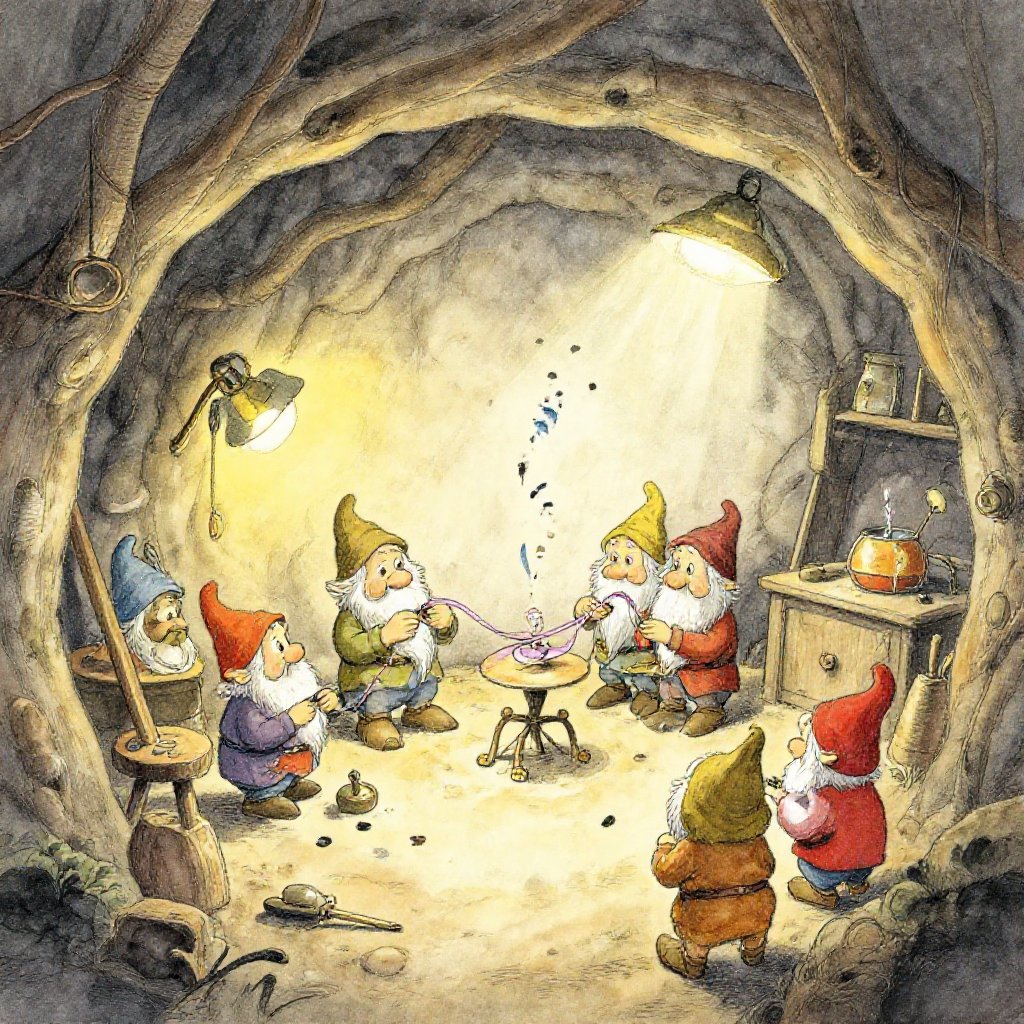
What came back from Nidavellir looked like a ribbon of silk.
It lay in the god's hand like a question mark, pale and soft, no heavier than a bandage. The gods passed it around and pulled at it and could not tear it. They tried to cut it with a blade that could cut stone. The blade turned aside. The ribbon was fine. This was Gleipnir.
They traveled to an island called Lyngvi, in the middle of a cold black lake, and they brought Fenrir with them. They spread the ribbon on the ground in front of him. Fenrir looked at it. He understood chains. He understood iron. But this thing was not iron and was not a chain, and the fact that the gods were smiling just a little too easily was not lost on him.
He said: I will let you put that ribbon on me, but only if one of you puts your hand in my mouth while you do it. As a pledge. As proof this is just a game.
The gods looked at each other. The silence went on long enough to mean something.
Then Tyr, who had fed him every morning since he was a pup, stepped forward and placed his right hand between Fenrir's teeth. The wolf went still. The gods wrapped the ribbon around him. Gleipnir tightened with each pass, thinner than silk but hard as anything, and the more Fenrir fought the tighter it became. He could not break free. He had known, before they finished, that he would not break free.
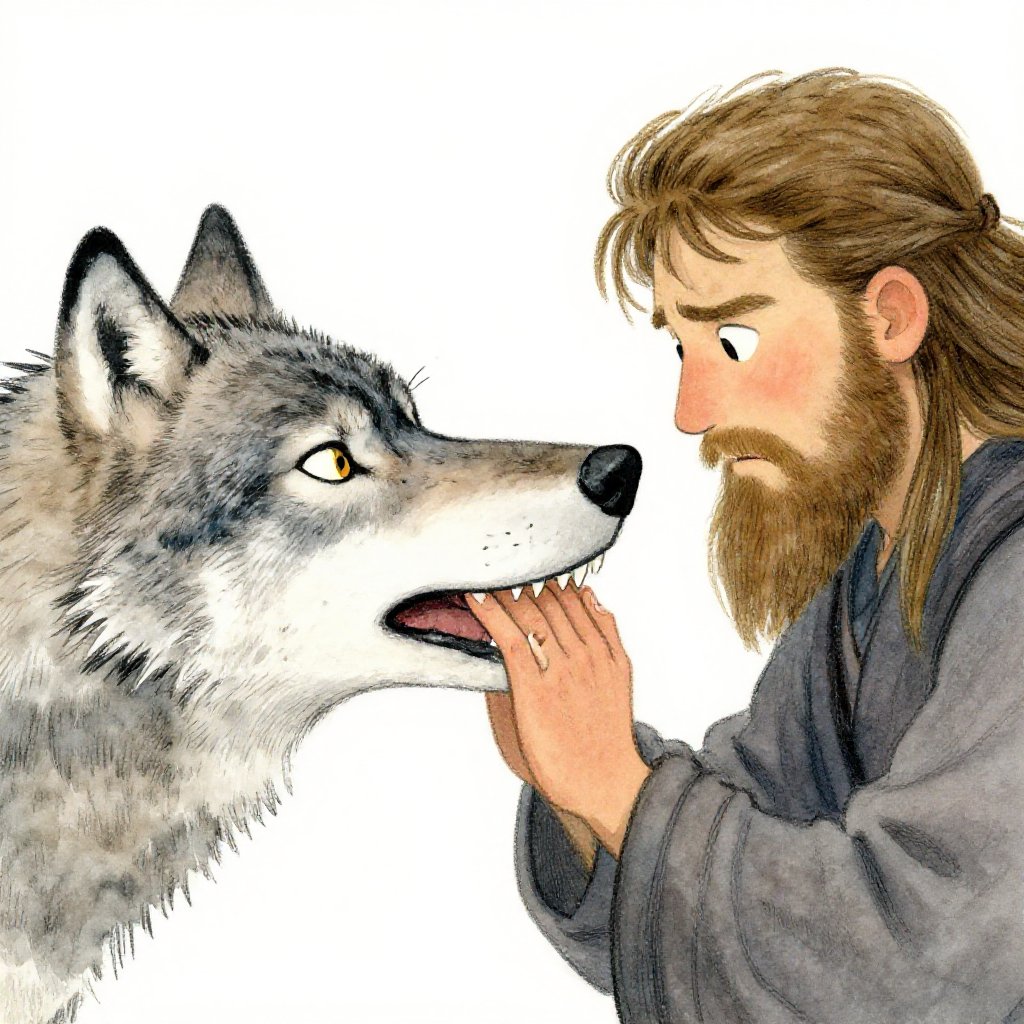
Fenrir looked at Tyr. Tyr looked back. Neither of them spoke. They had both understood the terms before this started.
When it was clear that Gleipnir had done what iron could not, Fenrir closed his jaws. Tyr made no sound. The other gods stood very still. The hand fell into the grass. Tyr held his wrist, blood running down his arm, and his face showed the grief of a person who has done the only right thing available and knows it was not enough to feel good about.
The gods drove a sword through Fenrir's jaw to prop his mouth open, because they could have left him with his dignity and they did not. He lay on the rock of Lyngvi, bound and furious, and he would lie there until Ragnarok.
Every account agrees on what he does then: he breaks free. He swallows Odin whole. He crosses the battlefield with his jaws stretched so wide the upper jaw scrapes heaven and the lower jaw scrapes the earth.
Tyr's sacrifice bought time. Exactly enough of it. Not one day more.
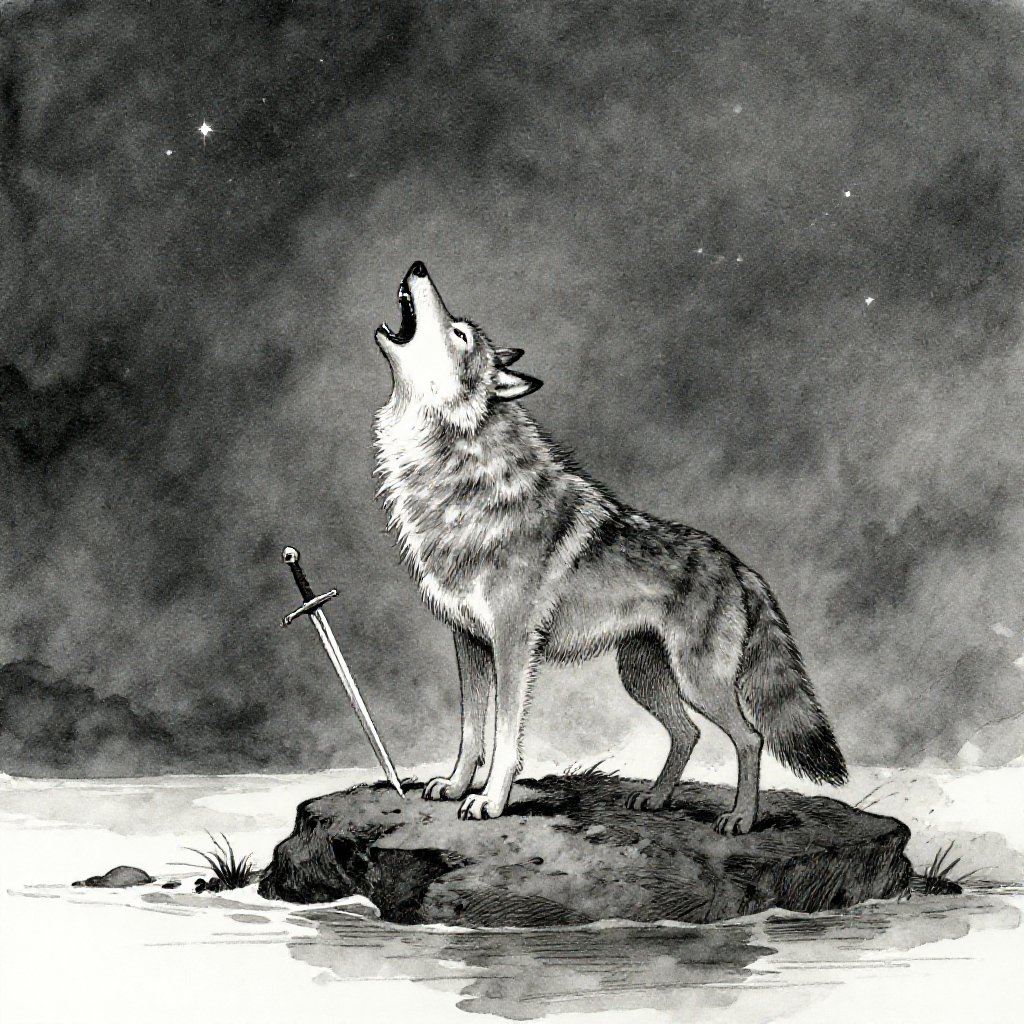
The lake is still there, in the stories. Lyngvi, the island of heather, in the middle of the dark water. Fenrir is still there too, in the versions where you choose to believe the world has not ended yet. The sword holds his mouth open. He drools a river that runs to the sea. The gods do not visit.
What they bought with Tyr's hand and the dwarves' ribbon was time. A world that kept turning. Harvests that kept coming. Children that kept being born. Ships that kept crossing water. A thousand years of all of it, more or less, depending on which telling you follow. They bought it with a trick, and the wolf knew it was a trick, and he lay there knowing that one day the ribbon would fail.
The Norse people told this story and kept living anyway. They kept building ships and planting fields and sailing into fogs they could not see through. They knew the wolf was out there. They went to sea regardless. Maybe that is the whole point. Not that the binding holds forever. But that you bind it, with whatever you have, and then you go on, for as long as you can, with the knowledge of what is coming sitting in your chest like a stone.