Mythwink
Sedna, Goddess of the Sea
She fell to the bottom of the world. The ocean kept her. Now she keeps the ocean.
Inuit Mythology
Mythwink
She fell to the bottom of the world. The ocean kept her. Now she keeps the ocean.
Inuit Mythology
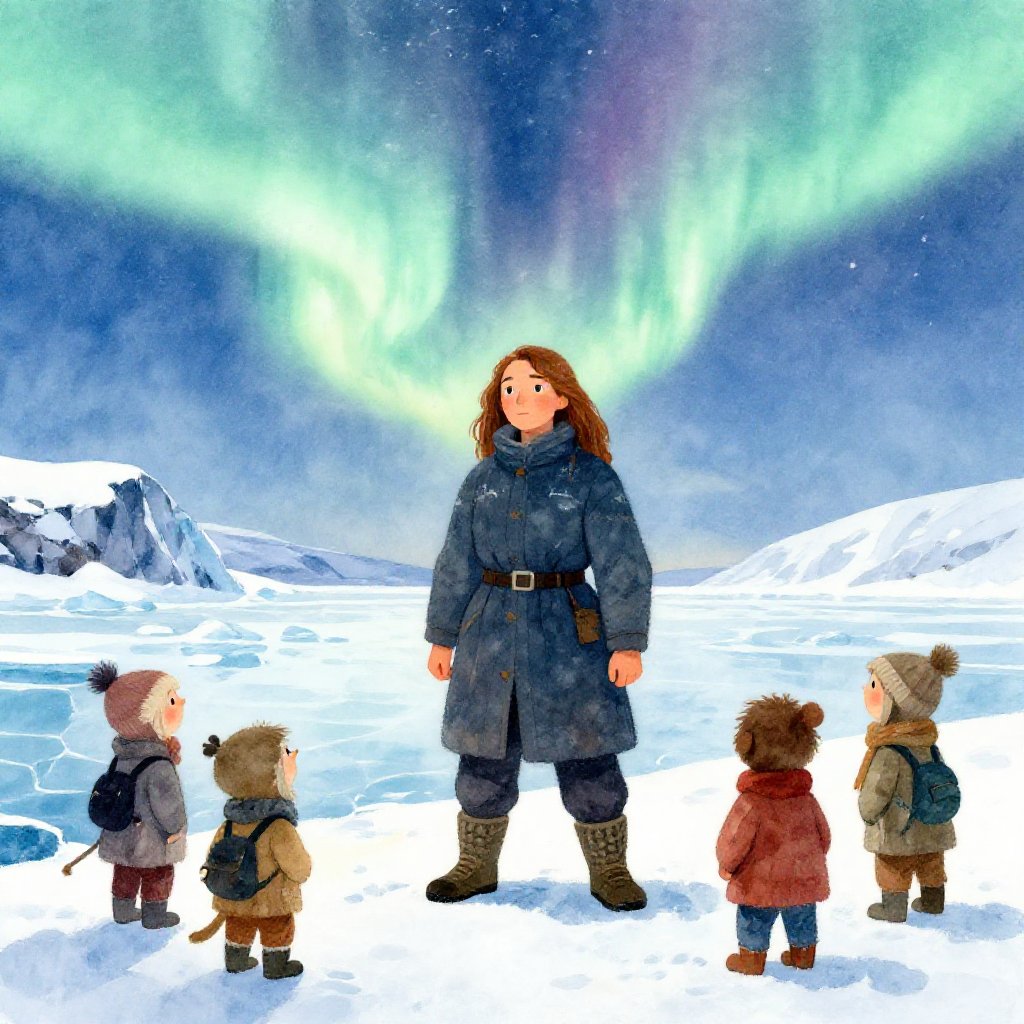
There are different versions of this story. In all of them, Sedna starts as a girl on land. In all of them, someone she trusted threw her into the sea. What changes from telling to telling is how much of what happened was her fault. Stories have a way of arguing about that, especially about women who suffer.
She was particular about who she wanted to marry. Her father wanted her to choose someone. The village was small, the winters were very long, and a daughter who turned away every suitor was a complication. When a stranger arrived who was handsome and persuasive and promised a good life across the water, her father decided the problem was solving itself. Sedna went with the stranger in his boat.
The coast of home grew small, then disappeared.
What she found on the island was not a good life. The stranger was not what he had seemed. He was a bird-spirit, a fulmar, and the nest was cold and full of fish bones. The promises had been made of air. She cried into the wind, and the wind carried her voice back across the water to her father. Eventually, he came.
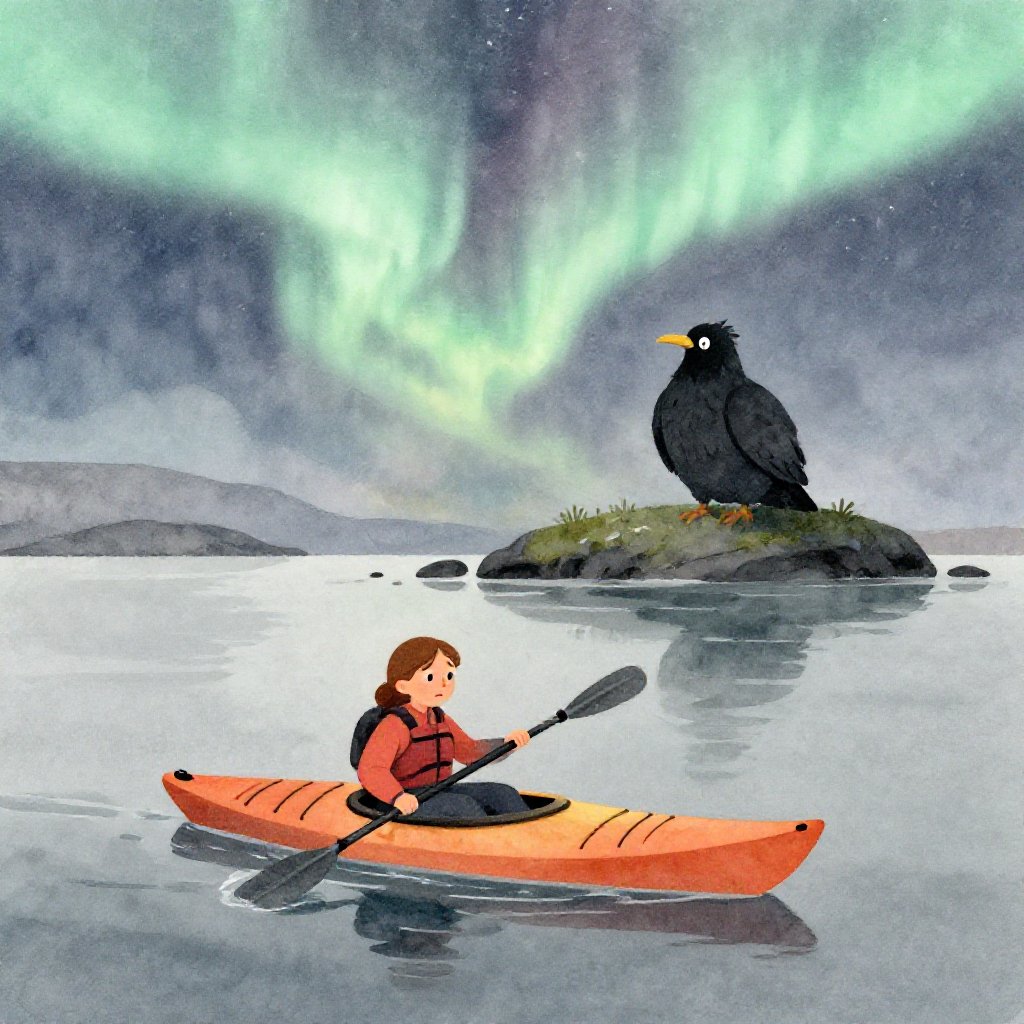
Her father arrived in his kayak. He had made a mistake, and he had come to fix it. He pulled Sedna out of the nest, and they paddled for home through cold grey water.
The bird-spirit came back and found her gone. He rose above the sea and beat his wings against the surface. The storm that followed was not ordinary weather. It was something with intention. The waves rose with the specific fury of something that wants something back. The kayak pitched. Water poured over the sides.
Her father looked at the storm and made a calculation. He had come to rescue his daughter. Now the storm was asking for her back. Fear does that kind of thinking very quickly, and the answers it arrives at are hard to look at afterward.
He pushed her over the side. She came back up and grabbed the edge of the kayak with both hands. He cut her fingers at the first joint. She sank. She came back up. He cut the second joints. She sank again, and came up again, holding on with what was left of her hands. He cut the last joints. This time, she did not come back up.

The cold at the bottom of the sea is not like the cold of wind or snow. It does not move. It is the cold of something that has always been cold and has never thought about being anything else.
Sedna fell through layers of dark water. Past the green light where shapes still exist. Down into the black where shapes are not required.
She did not die. That is the most important part of this story.
Her fingers had scattered as she fell, and as they fell, they became things: seals, walruses, whales, fish, every creature that swims in the Arctic sea. Sedna became something too. The pain and the cold and the depth changed her, the way great pressure changes what it holds. What reached the bottom of the world was not the girl who had cried on a bird-spirit's island. It was something that understood the sea the way the sea understands itself.
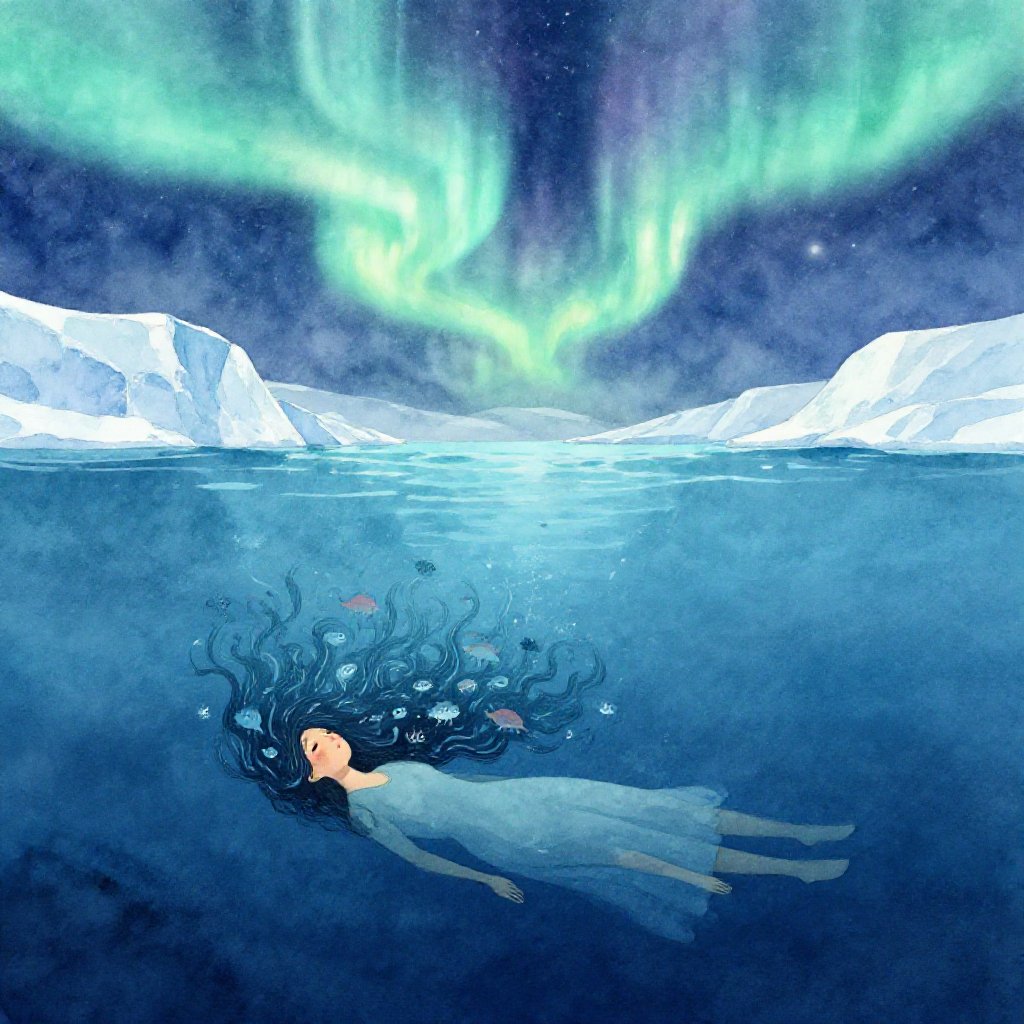
She settled into the deep dark and let her long hair spread out around her. The animals of the ocean moved through that hair the way thoughts move through a sleeping mind. She was not happy down there. Happiness is a surface thing. But she was powerful, and that was enough.
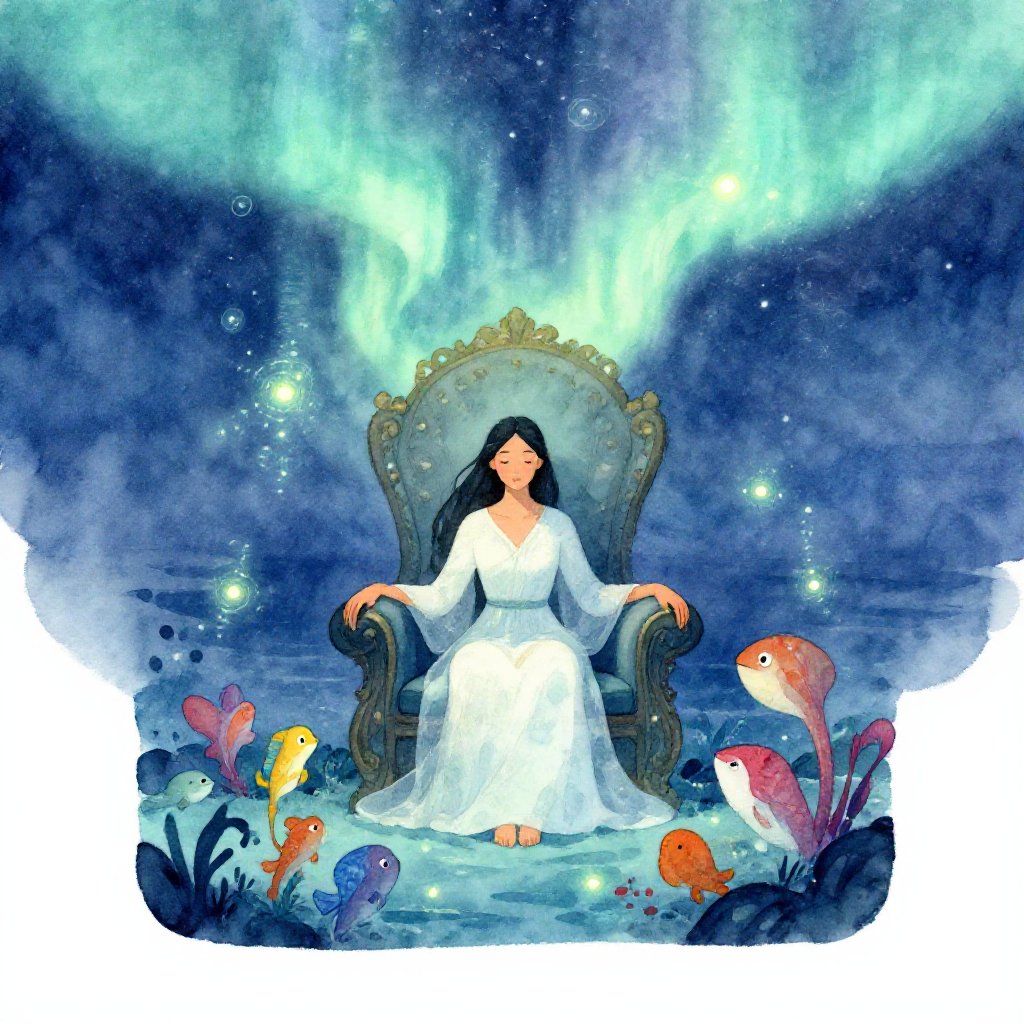
The people on the ice understood quickly that the sea had a keeper.
When the hunting was good, the kayaks came back full and the families were fed and the long winter was survivable. When the hunting was bad, the kayaks came back empty, or sometimes did not come back. The angakuit, the shamans, said the difference was Sedna's mood, and they were right.
Her hair tangled. When it went too long without combing, the animals stayed caught in the knots at the bottom of the sea. Nothing swam toward the surface. Nothing came to the hunters. So the shamans learned to go to her.
They entered trances and swam down through spirit roads to the ocean floor. This was not a journey anyone made easily. They found her in the dark, her hair matted with old sorrow. They sat with her, and they combed it out. Each knot they worked loose was something she was willing to release. When her hair lay smooth around her in the dark water, the animals moved upward again.
It was not an easy practice. It asked someone to go into the cold dark and sit with a wound that would never fully heal. But it worked. And survival asks this of a belief: not comfort, not simplicity. Just results.

Some hunters understood the agreement better than others. They knew that an animal taken with care and respect would return. A seal, given back to Sedna with gratitude, would come again in the body of another seal. The ocean was not a supply to be used. It was a circulation, and Sedna was the heart of it, down in the black water, keeping the rhythm going.
When hunters were careless, when they wasted meat or forgot the old agreements around the kill, the debt built up in her hair. She felt every broken promise. She responded the way anyone responds to being ignored after a long time of suffering: she stopped giving.
There were winters that tested everything communities could hold. There were seasons when every shaman made the dark journey and came back changed, having found her in the deep and smoothed what they could.
She is still there. The cold has not moved her. The years have not changed what she is. Different peoples of the Arctic know her by different names: Sedna, Nunavgak, Sanna, Arnakuagsak. But she is always the same woman, at the bottom of the same sea, tending the animals that grew from her own body, waiting to see whether the people on the ice still remember the bargain.
They remember. They have never been able to forget.