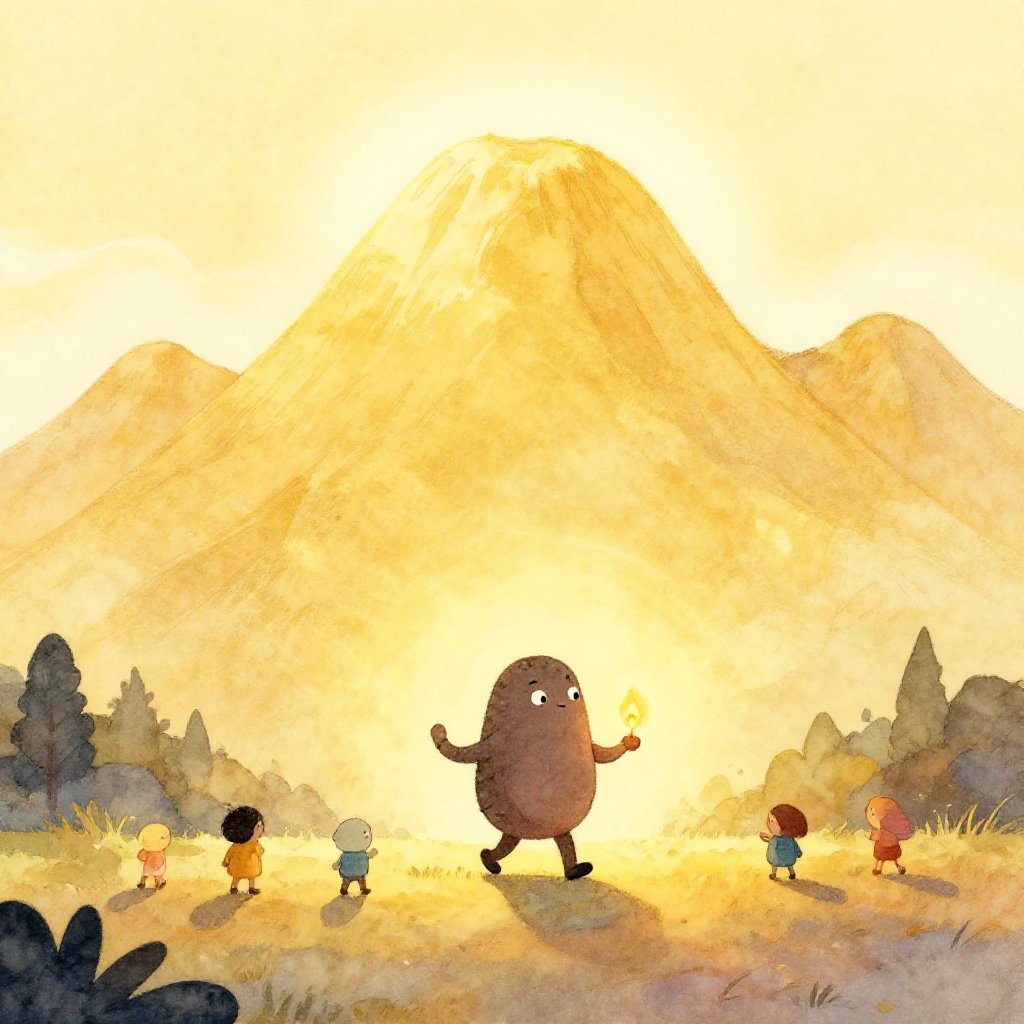
Mythwink
The Fire Thief
He could have stayed safe among the gods. He chose us anyway.
Greek Mythology
Mythwink
He could have stayed safe among the gods. He chose us anyway.
Greek Mythology
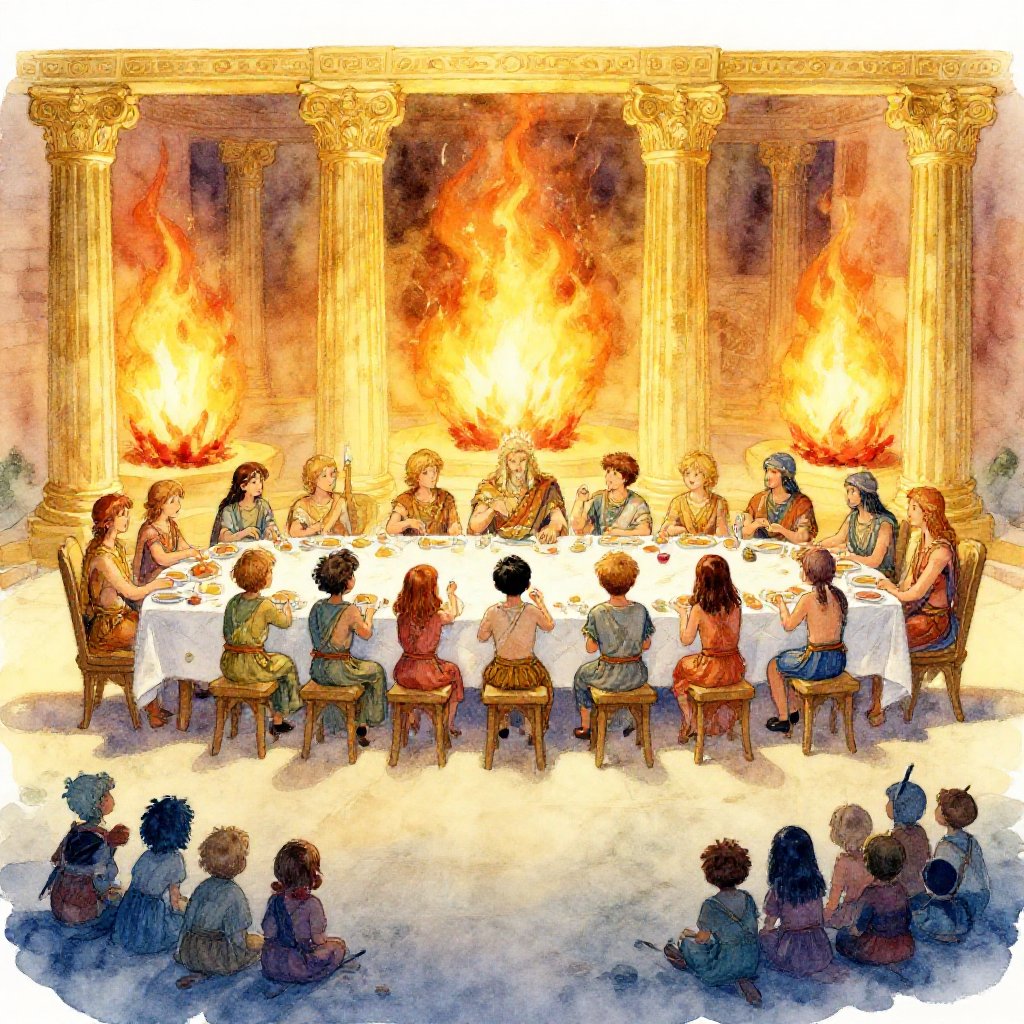
Here is something you should know about the gods: they had fire, and they were not sharing.
Not a little fire. Not a birthday-candle amount. They had great roaring rivers of it, pouring through the forges of Olympus, lighting up their enormous golden halls. And down below, on the cold dark Earth, the humans had nothing. No fire. No warmth. No way to cook their food or scare off wolves or see in the dark. The gods knew this. They just did not care very much.
Prometheus cared. He was a Titan, which is like a god but older and with considerably worse luck. He had made the humans himself, out of river clay, and he was not pleased about how they were doing. He stood at the rim of Olympus and looked down at the people huddling in the dark, sharing body heat like a pile of puppies, and he thought: that is not right.
Zeus knew exactly what fire would do for humans. That was the whole reason he kept it locked away. Cold humans prayed more. Cold humans needed the gods more. Give them fire and who knew what they might build. Zeus preferred not to find out.
You might think stealing from the king of all gods is a bad idea. You would be correct. Prometheus thought about this. Then he went ahead anyway.
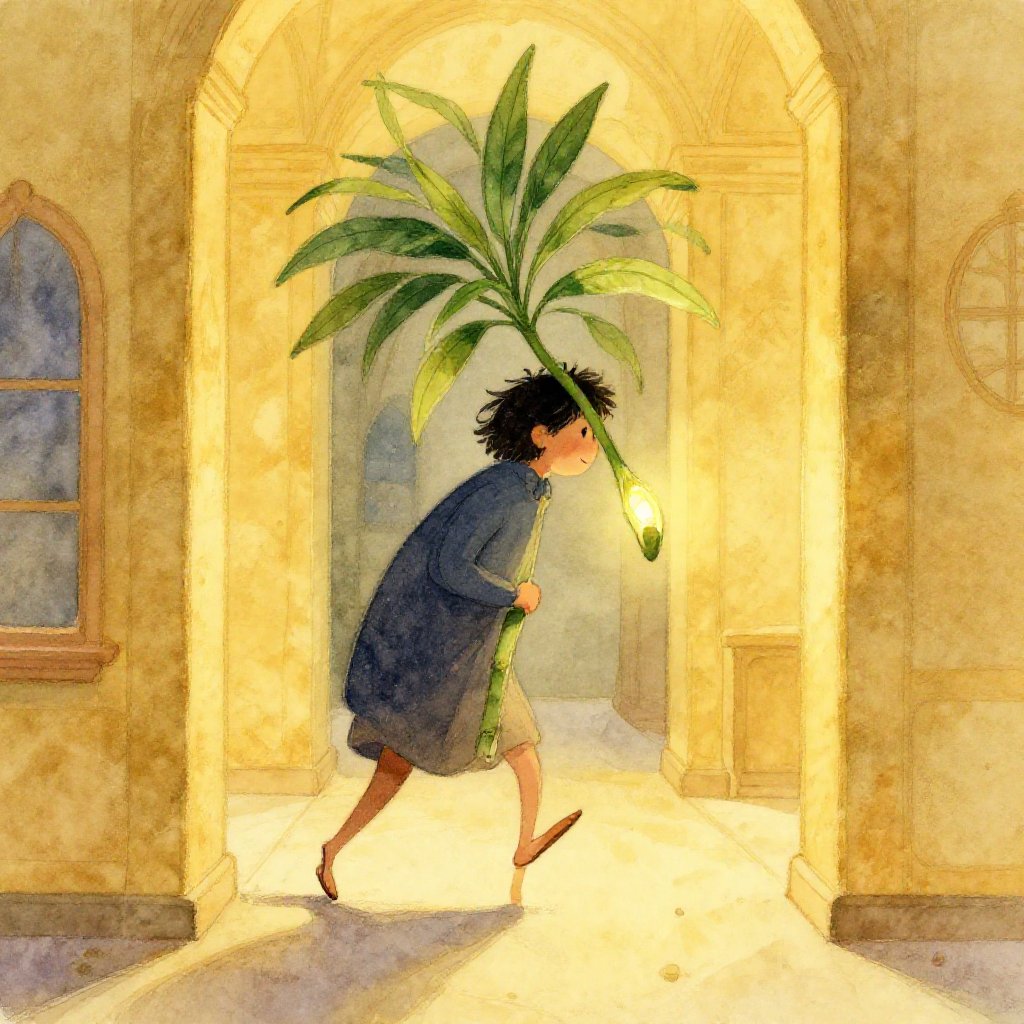
He walked to the forge of Hephaestus. He broke off a coal of living fire. He hid it inside a hollow fennel stalk, because the dried pith burns slowly without catching the outside. Anyone can want to steal fire. The trick is in the carrying.
He came down from Olympus before dawn and walked into the nearest village and pressed the ember to dry grass and blew. The people scrambled back at first. Then the warmth reached them. An old man stretched his hands toward it and made a sound Prometheus had never heard a human make before. Something like relief. Something like thank you, said to the air.
He showed them light, heat, cooked meat, hardened clay, softened metal. Then he turned and walked back up the mountain. He walked slowly. He already knew what was coming.
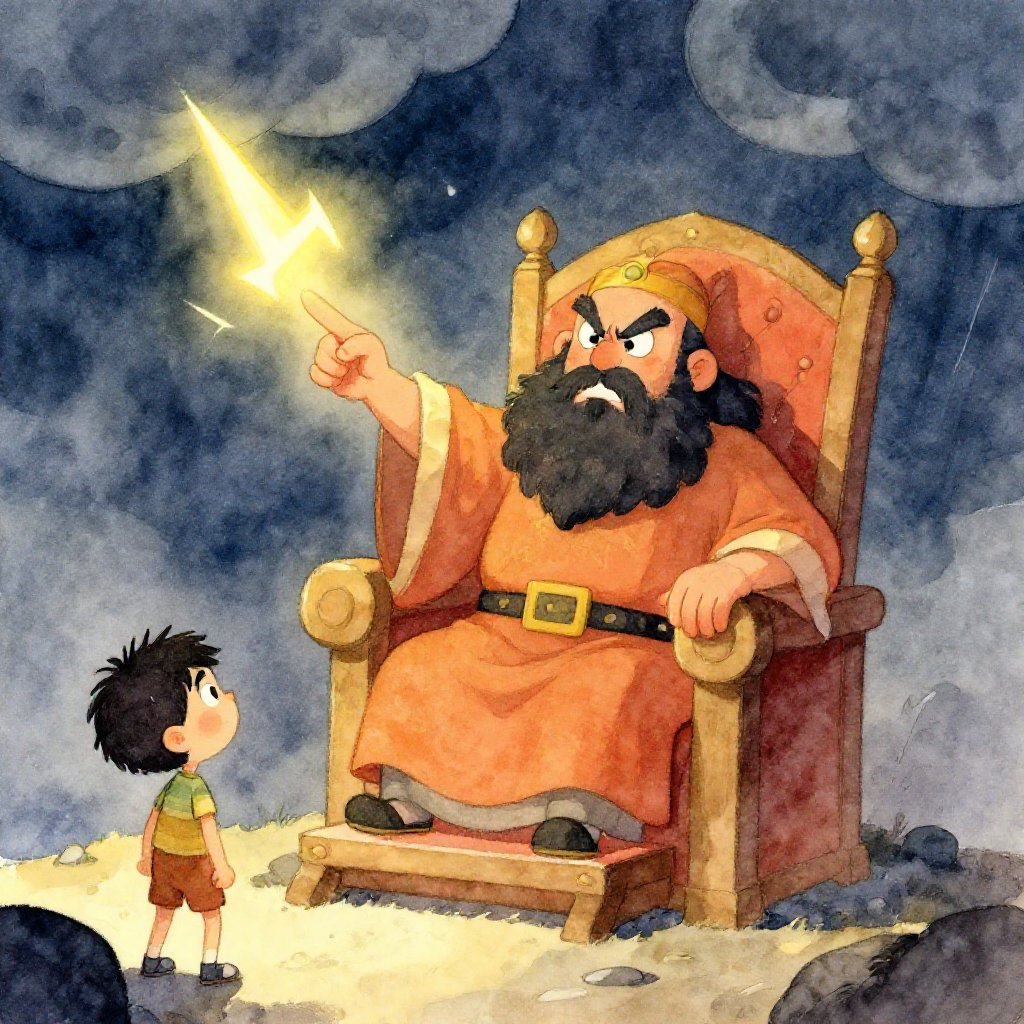
Zeus found out. This was not a surprise.
He was not loud about it. He sat very still in his great chair and looked at Prometheus with an expression that was almost calm, and that was worse than shouting would have been.
He sent two beings called Kratos and Bia, which meant Strength and Force, and they were less gods than instruments. He sent the craftsman Hephaestus too, to forge the chains, because only a god's chains could hold a Titan. Hephaestus cried the entire time. He was the one who had built the forge where the fire was kept. He knew Prometheus. He hated this job. He did it anyway, because that is the kind of power Zeus had.
They spread Prometheus across a cliff face in the Caucasus mountains, at the far edge of the world. Wrists and ankles locked into stone. The chain across his chest was so tight he could barely breathe. Hephaestus said he was sorry. Prometheus said it was all right. And he meant it. He looked out from the cliff at the valleys below, where a hundred cook fires were rising from a hundred villages. He looked at all that smoke and he thought: yes. Worth it.
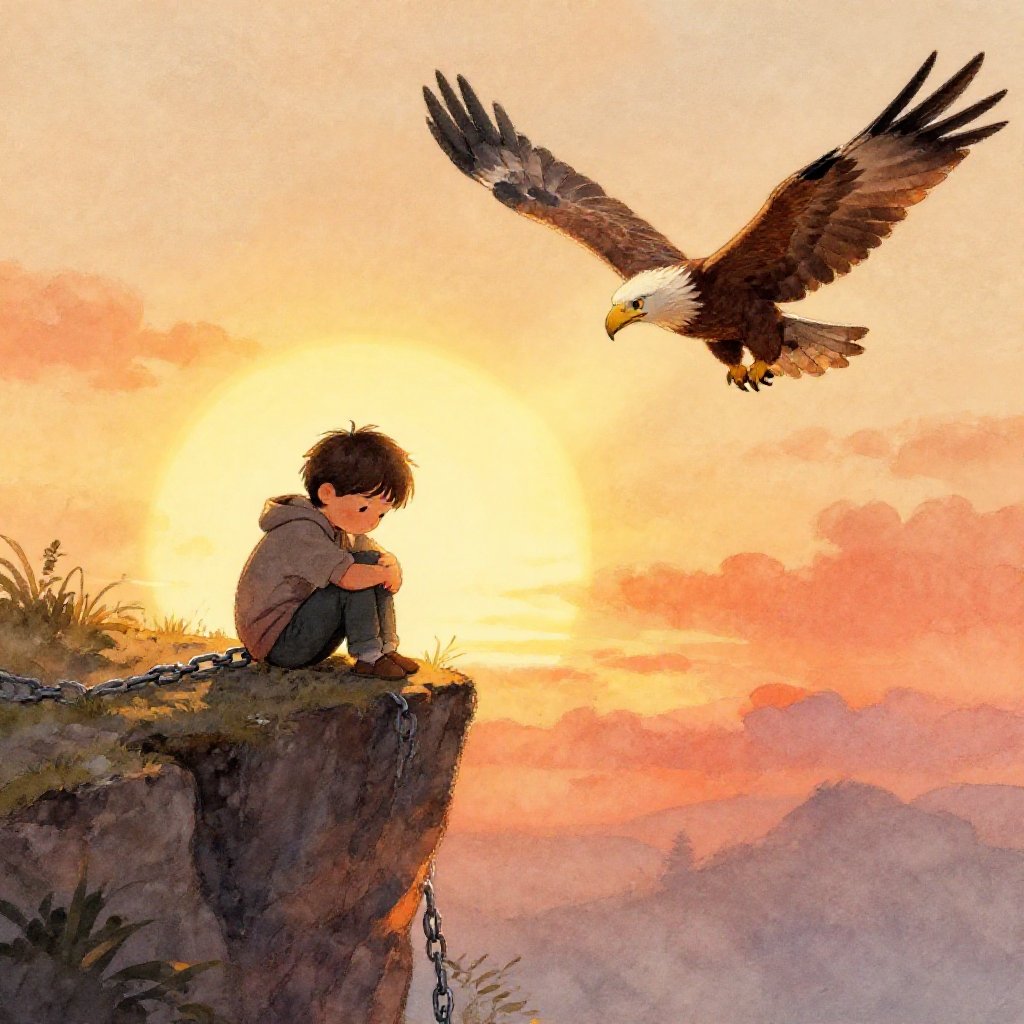
Every morning, the eagle came.
It was enormous. Its shadow crossed the cliff before it landed, and it landed on his chest with a weight that cracked things. Then it began its work. The eagle ate his liver, every single day, because Zeus had a particular sense of what made a punishment. The Titan body healed itself each night. And every morning, when the eagle returned, it found everything whole again.
This was the cruelty that had no bottom. It could not end because Prometheus could not die. He would heal. The eagle would come back. The sun would rise and the eagle would come and this would happen until Zeus decided otherwise, and Zeus had not decided otherwise.
There were sailors who sometimes spotted him from ships far below. They told the story in harbor towns. The story got strange in the retelling, the way stories do, until most people did not believe it. But Prometheus could see their fires at night, orange points of light scattered along the dark coastline. He looked at those lights every evening. The sight of them did not make things worse. Nothing made things worse. He had chosen this with open eyes.
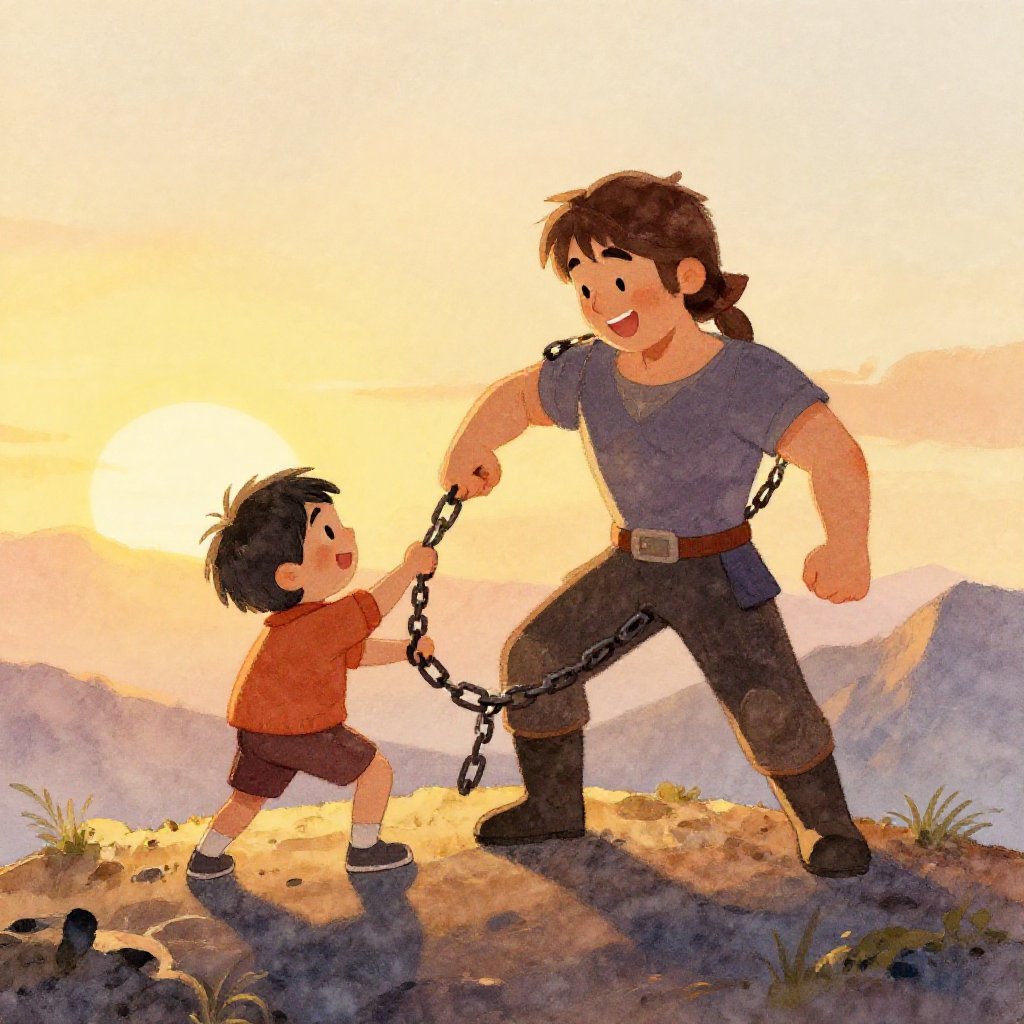
Years later, or centuries, a hero came through the Caucasus on his way to the garden of the Hesperides. His name was Heracles. He was the son of Zeus, which gave the whole situation a rather interesting flavor.
He heard the eagle before he saw the cliff. The sound stopped him on the mountain path. He notched an arrow without thinking, because that was the kind of man Heracles was: his body knew what to do while his mind was still catching up. He shot the eagle out of the sky.
Then he climbed up and broke Prometheus's chains with his bare hands. This took a while. It was never really in question.
The Titan sat up slowly. He looked at the valley below for a long time. Then he stood. Heracles asked if he needed anything. Prometheus said he was hungry. Heracles laughed. They built a fire right there on the cliff face and cooked meat over it.
That is where the story ends: the Titan who stole fire, eating food cooked over a flame, on the same rock that had been his prison, with the son of the god who had put him there. Zeus let it stand. Even gods know when a story has finished itself.