Mythwink
Do Not Light the Torch
He was told not to look. He looked. That is why you die.
Japanese Mythology
Mythwink
He was told not to look. He looked. That is why you die.
Japanese Mythology
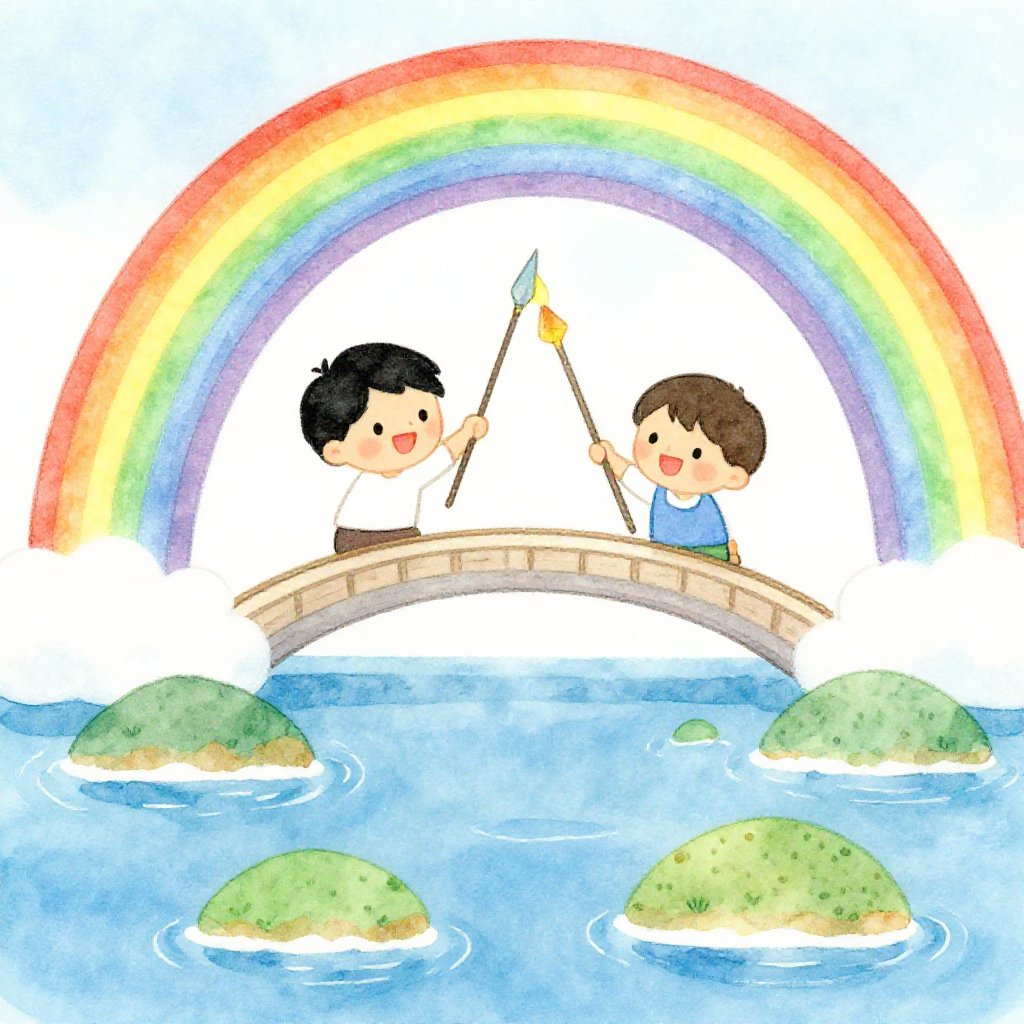
Izanagi and Izanami made Japan together.
They stood on the floating bridge of heaven and stirred the ocean with a jeweled spear until the brine thickened and dripped and became the islands below. They came down to the islands they had made. They built a pillar, walked around it in opposite directions, met in the middle, and spoke. From their speaking came the gods of wind and sea and many other things.
Then came the fire god, Kagutsuchi. And from the fire god came the wound that changed everything.
Izanami gave birth to Kagutsuchi, and the fire took her the way fire takes wood. Not quickly. It took her slowly, and Izanagi held her and could not stop any of it. When she was gone he wept until his tears became minor gods, because in those days everything came from strong feelings if the feelings were large enough. Then he took his sword and killed the fire god in a rage that also produced gods, several of them, from the blood and the pieces. This is how the oldest myths work. Loss makes the world larger, not smaller.
Izanami went to Yomi, the land beneath, the land of roots and darkness and things that have ended. Izanagi knew where she was. He waited until he thought he had accepted it. He had not. He went down.
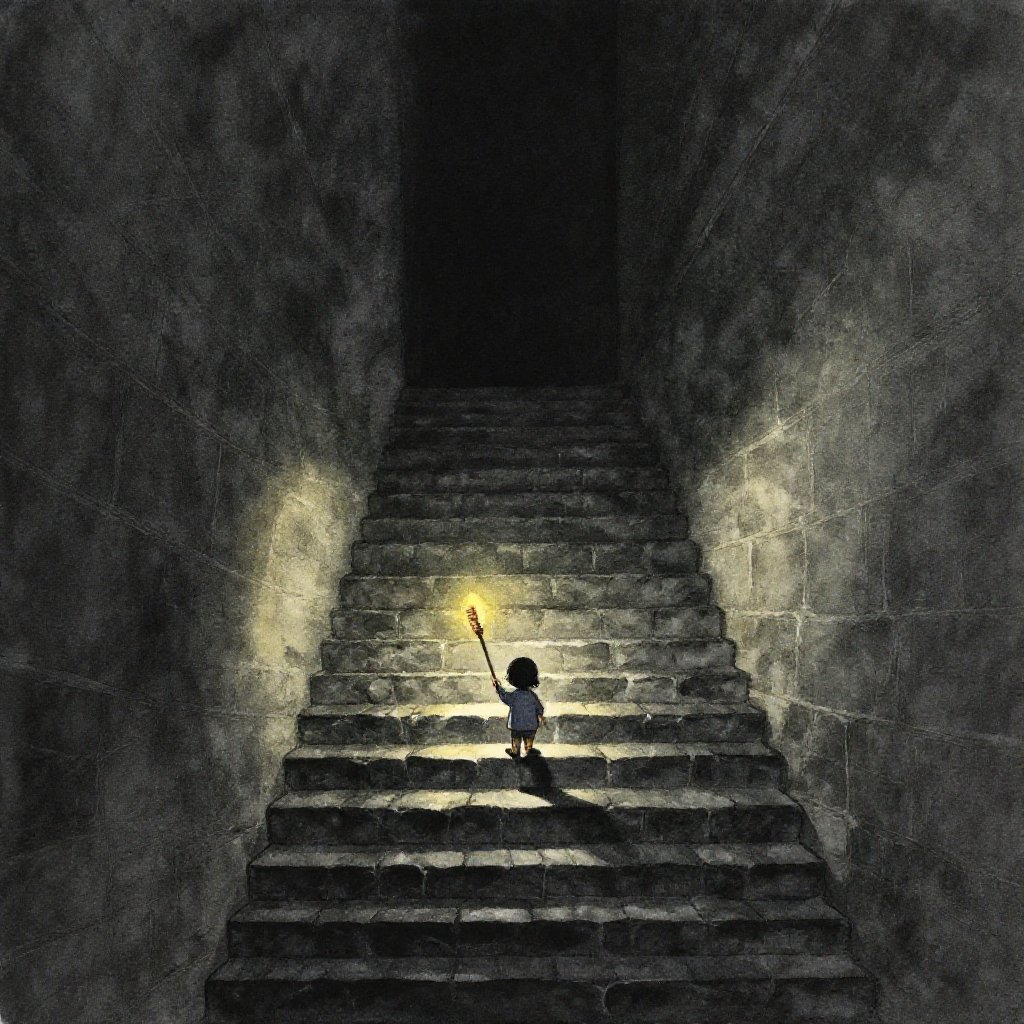
The path went down, and the light of the surface world faded to a memory, and then to something even smaller than a memory. The rocks were wet with something that was not water. The air had the kind of quiet that is not peace.
He found the gates: great sealed doors at the bottom of the slope. And through them, a sound he recognized. Her voice.
She was there. She called to him from the other side without opening the doors. She was glad he had come, she said. She was sorry, she said. She would speak to the gods of Yomi about coming back with him. He must wait outside. He must not come in. He must, above all, not light a torch.
He agreed. He stood in the dark outside the gates of Yomi and he waited.
He waited a long time. He listened to sounds from behind the doors. She did not return. After a very long time, he reached up and pulled a tooth from the comb in his hair and lit it.
He should not have done this. You already know that.
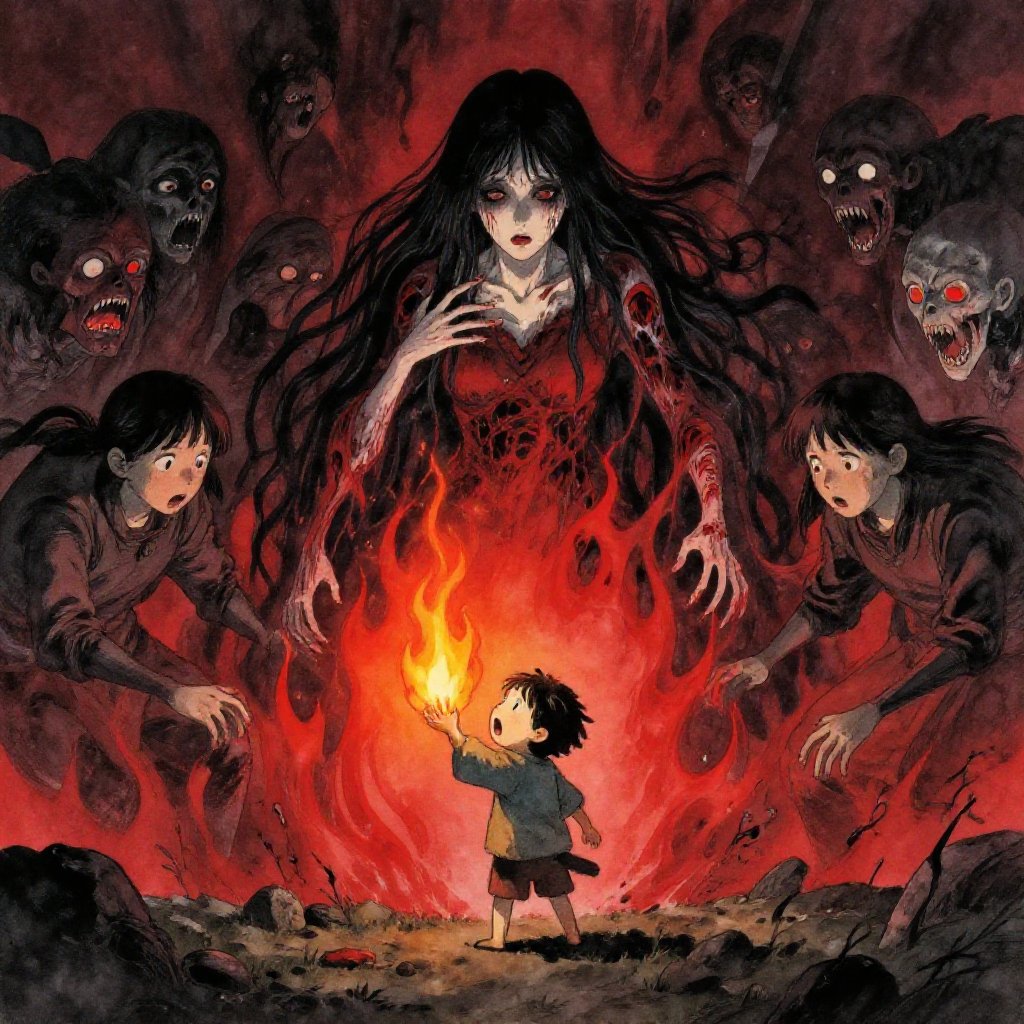
She was standing very close to the gate. She may have been about to come through it. The small flame caught her face first.
She was not the person he had stood beside on the bridge of heaven. The Kojiki, which is the oldest book of Japanese mythology, says she was filled with maggots, and that eight gods of thunder had taken up residence in her body. Thunder-in-the-Chest. Thunder-in-the-Belly. Thunder-in-the-Head, and five others after those. She was still her shape. Everything inside the shape had changed.
Izanagi ran. He did not try to speak to her or reach for her. He turned and ran straight back up the path toward the surface and the light and the world they had made together. Behind him he heard her voice change into something that was not voice and was not silence. He heard the gates of Yomi open. He heard pursuit.
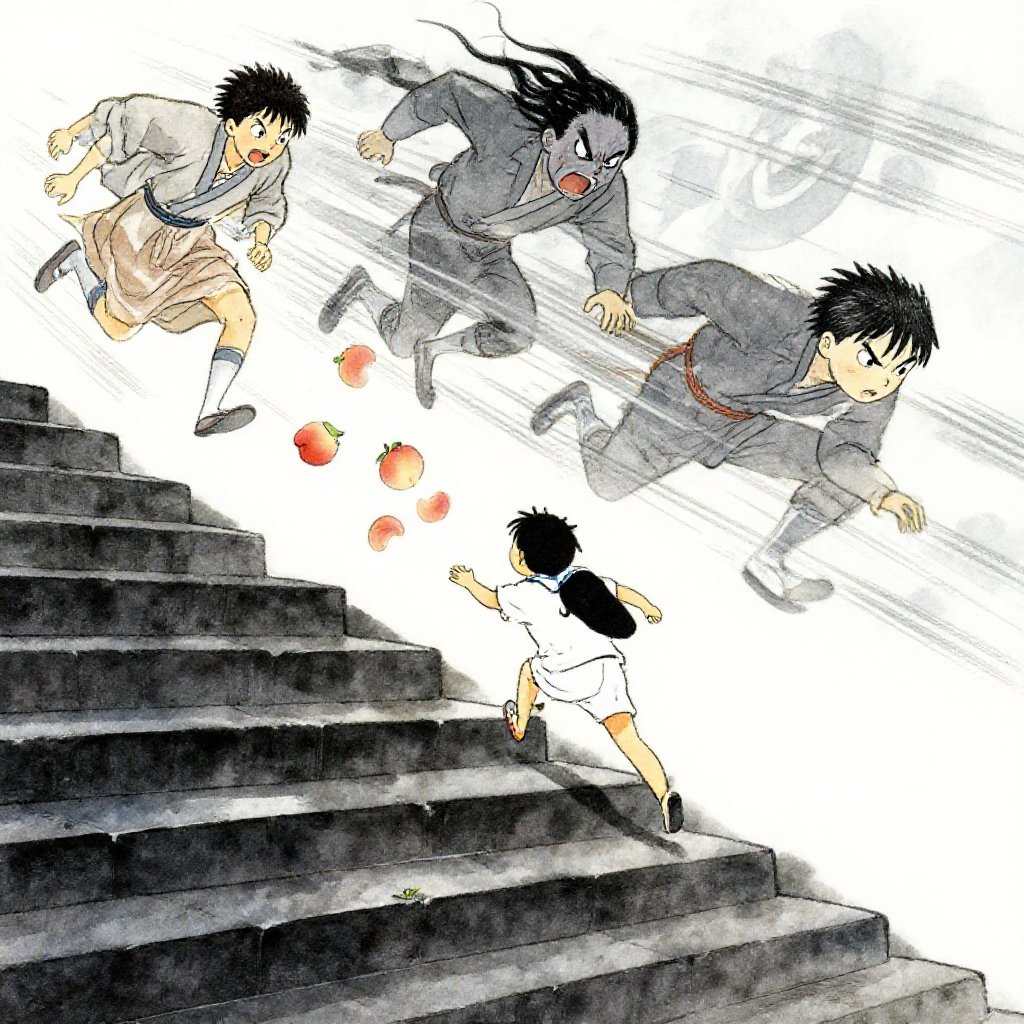
She sent the Shikome after him first. The Shikome were the hideous women of Yomi, eight of them, fast in the dark the way things born underground are fast.
Izanagi ran and threw his black headdress behind him. It became a bunch of grapes. The Shikome stopped to eat them, because even the dead are hungry, and he gained ground. He threw his comb and it became bamboo shoots and they stopped again. He kept running.
Then Izanami came herself. Not sending others. Coming. All eight thunder gods inside her, and the dark behind her. He ran the way a god runs when he discovers for the first time that something in the world can truly frighten him. He reached the peach trees that grow at the edge between Yomi and the living world, and he threw peaches at the pursuing thunder gods and they retreated.
Peaches are still a barrier against the dead, which is why you know to leave them at graves.
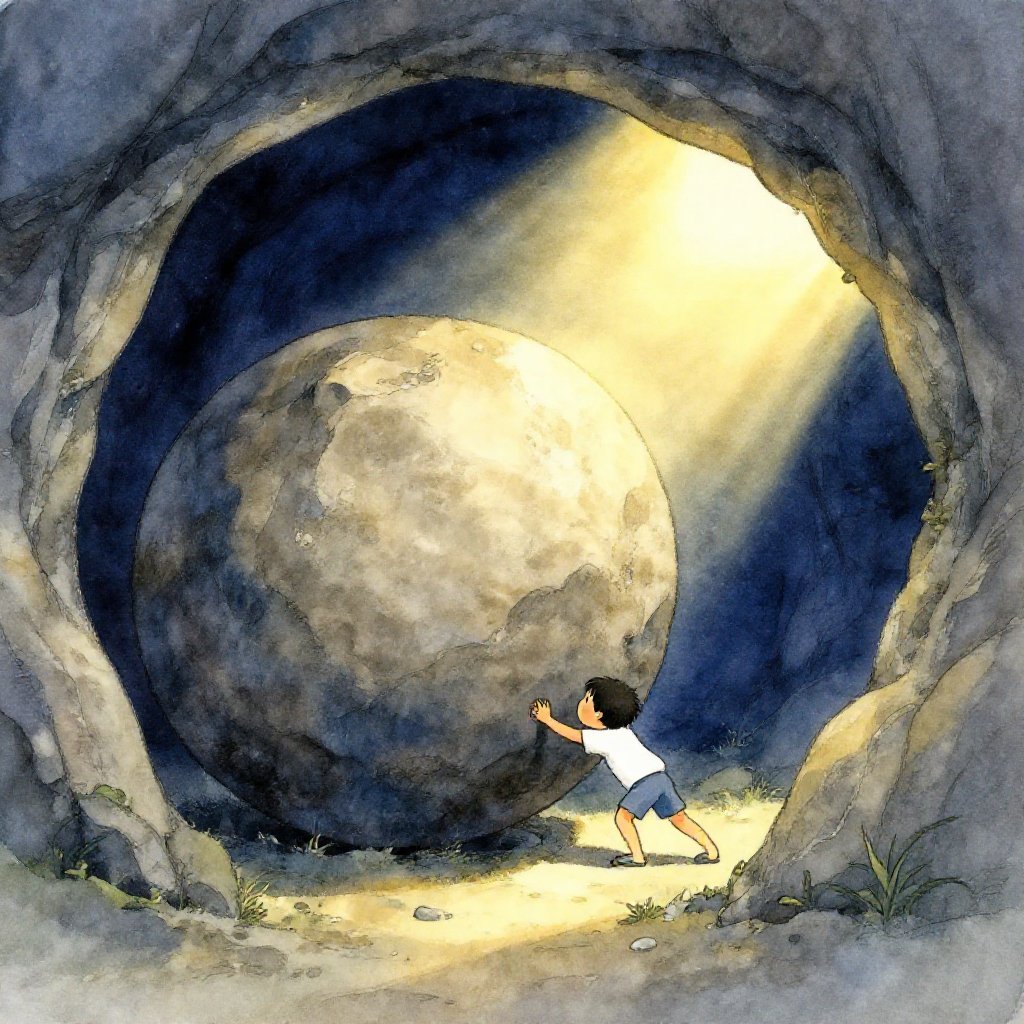
He reached the pass where Yomi opens toward the sky. He rolled a great boulder across the mouth of it, a boulder so heavy it would take a thousand people to move. He stood on the living side, breathing.
Then he heard her voice through the rock, inches away. She said: I will kill a thousand people every day. He said: I will cause fifteen hundred to be born. That is the origin of death and birth in this tradition. They negotiated it through a boulder. She kept her promise. He kept his. The numbers have held since the beginning.
On the way back to the surface he found a river, and he waded in.
He needed to be clean. He needed to wash off what had come from Yomi: the dark, the smell, the sight he had seen and could not unsee. The Kojiki records what was born from each piece of clothing he removed, and from the pollution of Yomi washing away in the river. He cleaned his left eye, and from it came Amaterasu, goddess of the sun. He cleaned his right eye, and from it came Tsukuyomi, god of the moon. He cleaned his nose, and from it came Susanoo, god of storms.
He had gone down to bring back one person. He came back alone. But he came back with the sun.
That is either the worst trade imaginable or the best one. It depends on where you are standing.
The Kojiki does not say what Izanagi did after that. It moves on to the adventures of his children: Amaterasu hiding in a cave and plunging the world into darkness, Susanoo's storms and his long exile. Izanagi fades from the story the way people fade when they hand off the thing they were carrying to the next generation. He is said to have retired to a small, quiet palace, hidden away. He had made the islands of Japan, walked into death, and run from his wife through the dark. He had earned quiet.